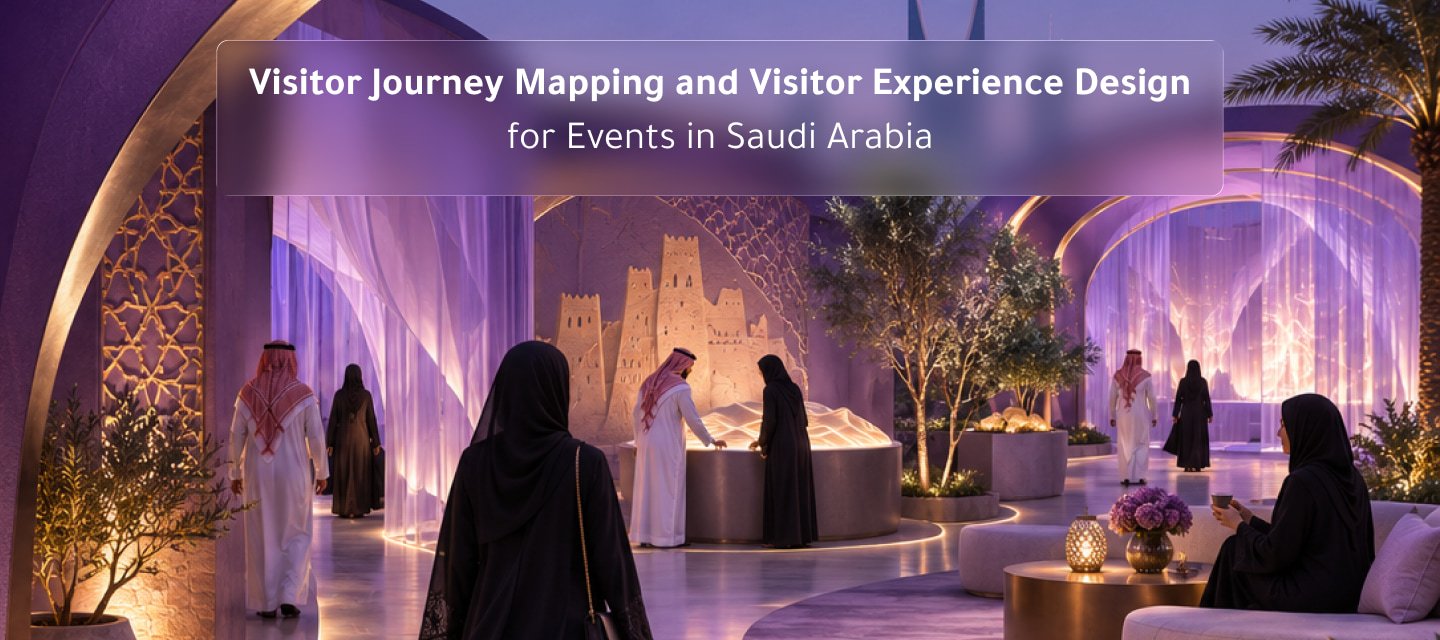

The success of any event in Saudi Arabia depends on the visitor’s experience from arrival to departure. This is where visitor journey mapping comes in, outlining every step they go through: registration, entry, navigation, interaction, and exit.
This mapping identifies potential congestion and confusion before execution and connects venue design with the client’s objectives. Combined with visitor experience design, it transforms an event from a collection of arrangements into an experience the audience remembers. This is exactly the approach AYMA Signature, based in Riyadh, follows across all its projects.
Why Does Event Planning Cost Vary From One Event to Another?
Costs depend less on the event type and more on the experience you want to deliver. Visitor journey mapping helps identify where to invest and where to save without compromising the results.
The Visitor Journey Determines Spending
-
Each visitor touchpoint has its own cost.
-
Events with more interactive stations require higher budgets.
-
Elements visitors rarely notice may not need significant investment.
Differences Between Projects
-
Different audiences and objectives change the scope of work.
-
Design customization affects overall costs.
-
Tight timelines increase risks and expenses.
What Factors Affect Event Budget Planning in Saudi Arabia?
The Saudi market has unique considerations, from seasons and cities to permits and regulatory requirements, all of which directly impact visitor experience design and the visitor journey.
Saudi Market Factors
-
Event location and city, whether Riyadh, Jeddah, or the Eastern Province.
-
Seasons and national occasions that increase vendor demand.
-
Permits, safety, and regulatory requirements.
Project Factors
-
Number of attendees, venue size, and operating days.
-
Construction, fabrication, and customization requirements.
-
Sound, lighting, and screen systems.
Steps to Determine Your Budget
-
Define the total available budget.
-
Estimate attendance and understand your audience.
-
Identify essential event elements.
-
Classify expenses into fixed and variable costs.
-
Set aside a contingency fund for unexpected changes.
What Are the Main Components of an Event Budget?
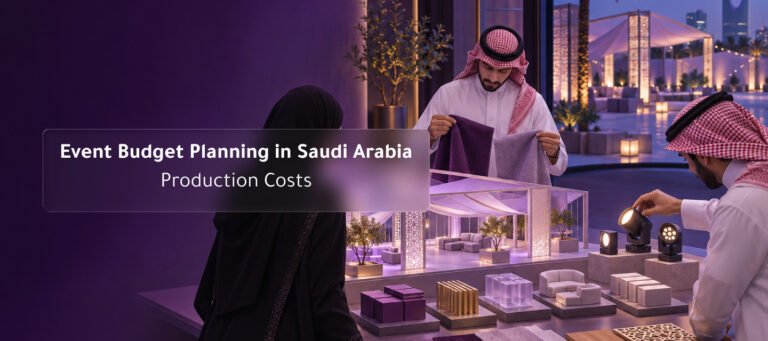
Dividing the budget by visitor journey stages is clearer than splitting it into scattered items, as visitor journey mapping connects every riyal to an experience visitors actually see.
Experience Components
-
Creative design and 2D and 3D designs.
-
Construction, fabrication, and décor.
-
Sound, lighting, screens, and visual content.
Operational Components
-
Operations, installation, and dismantling teams.
-
Permits, safety, and logistics.
-
A contingency fund for emergencies and unexpected changes.
How to Build an Effective Event Budget Step by Step?
Always start with the objective, not the price list. Then allocate the budget step by step across the visitor journey using visitor journey mapping.
Budget Planning Steps
-
Define the objective and audience in a clear Client Brief.
-
Conduct visitor journey mapping and identify key touchpoints.
-
Estimate the cost of each touchpoint based on its priority.
Before Approval
-
Compare vendor quotes based on the same scope.
-
Approve the Scope of Work (SOW) and identify excluded items.
-
Set aside a contingency fund before signing.
How to Optimize Event Costs Without Compromising Quality?
The estimated budget outlines expected costs before the project begins, while the actual budget reflects expenses incurred during execution. Comparing the two helps identify discrepancies, understand cost increases, and improve planning for future events.
Types of Budgets
-
Estimated Budget: Forecasts costs based on the project scope and requirements.
-
Approved Budget: The final amount agreed upon before execution.
-
Actual Budget: Total expenses after the event is completed.
Why Track Budget Variances?
-
Identify additional expenses early.
-
Monitor vendor commitments and payments.
-
Document any changes to the scope of work.
-
Compare actual results with initial estimates.
What Are the Common Event Budgeting Mistakes to Avoid?
Smart savings come from cost optimization, not cutting the experience. Visitor journey mapping helps identify what deserves investment and what visitors may not even notice.
Where to Save
-
Reduce elements that do not affect the visitor experience.
-
Consolidate vendors and compare their quotes using clear evaluation criteria.
-
Plan early to avoid rush costs.
Where Not to Cut Costs
-
Never compromise on safety or execution quality.
-
Preserve the moments audiences will remember.
-
Do not skip technical supervision during installation.
What Are the Common Event Budgeting Mistakes to Avoid?
At AYMA Signature, we don’t treat events as separate budget items. We manage them as complete experiences, starting with the objective and ending with a report that measures results, all within the AXOS ecosystem.
A Different Approach
-
We use visitor journey mapping before designing the event space.
-
We apply cost engineering before approving prices.
-
We separate the client brief, creative proposal, scope of work, and financial proposal.
Oversight and Transparency
-
We evaluate vendors through the Vendor Intelligence System within AXOS.
-
We document changes, approvals, and responsibilities.
-
We measure the experience and build a knowledge base for future projects.
Frequently Asked Questions
What Are the Five Stages of Successful Event Planning?
Start by defining the objective and audience, followed by concept development and visitor journey design, then technical and financial scope engineering, execution and quality and risk control, and finally evaluation and a closing report.
What Is the Difference Between Event-Day Planning and Comprehensive Planning?
Event-day planning focuses on managing on-site execution, including scheduling, operations teams, vendors, and guest arrival and departure times. Comprehensive planning covers everything from concept development, design, budgeting, and permits to dismantling and reporting.
What Services Are Included in Event-Day Planning?
These typically include preparing the Run Sheet, coordinating vendors and teams, supervising installation and operations, ensuring quality and safety, managing visitor entry and movement, resolving issues in real time, and coordinating with the client throughout the day.
How Do I Choose the Right Event Planner?
Choose a planner who asks about your objectives before discussing individual items, provides clear visitor journey mapping, and separates the creative concept, scope of work, and financial proposal.
Conclusion
Memorable events don’t happen by chance. They are the result of planning that starts with the visitor and measures its impact. With effective visitor journey mapping, every riyal in your budget has a purpose, and every moment of your event has a goal.
Ready to turn your next event into an unforgettable experience? Contact AYMA Signature in Riyadh today and book a discovery session to discuss your objectives and develop a tailored visitor journey mapping and proposal that fits your budget.